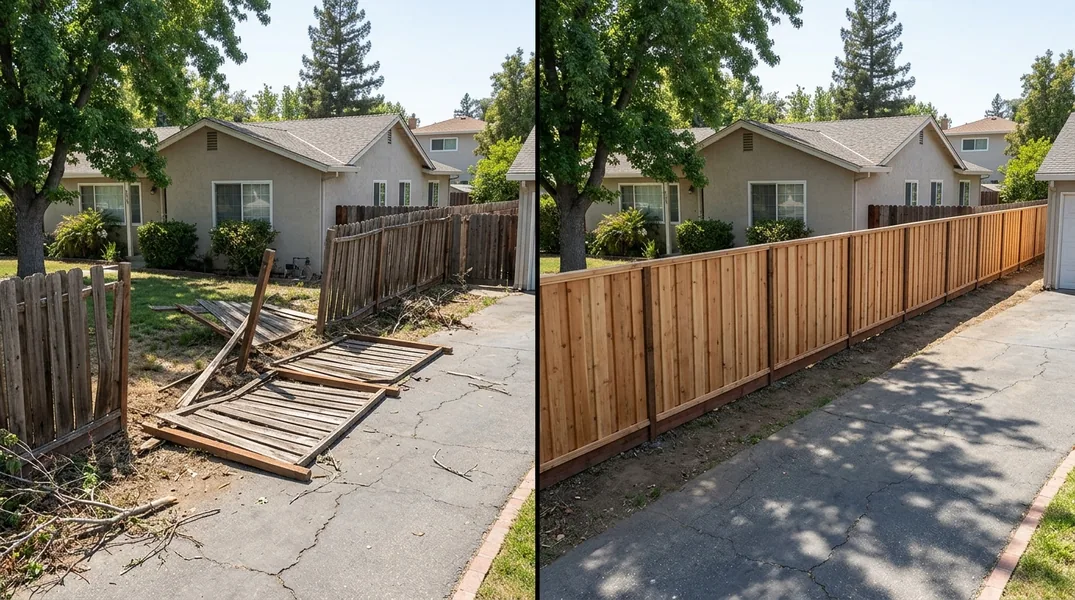
Understanding Common Storm Damage on Wood Fences
After a major storm passes through San Jose, homeowners often discover unexpected damage to their outdoor structures. Your fence is one of the first lines of defense against harsh weather, which means it frequently bears the brunt of wind gusts and heavy rainfall. Understanding what to look for after a storm can help you address problems before they become costly repairs.
Wood fences are particularly vulnerable to storm damage because of their natural composition and exposure to the elements. When wind speeds exceed 40 mph, fence panels can warp, crack, or even snap entirely. Rain damage develops more gradually but can be equally destructive. Water penetration leads to rot, which weakens the structural integrity of your fence posts and boards. The combination of wind and moisture creates the perfect conditions for accelerated deterioration, especially in older Wood & Privacy Fence Installation systems that lack proper sealing or maintenance.
Visible Signs of Wind Damage to Your Fence
Wind damage manifests in several distinctive ways that you can identify with a careful inspection. Look for leaning or tilted fence sections, which indicate that posts have shifted or weakened at ground level. Cracked or split boards are another telltale sign of wind stress, particularly if the cracks run lengthwise along the grain. Loose or missing fence boards, bent hardware, and separated joints all point to wind impact that requires immediate attention.
Pay special attention to the fence line at ground level and where boards connect to posts. These areas experience the most stress during high winds. If you notice that your fence is no longer standing perfectly vertical, or if you can see gaps where boards have pulled away from the frame, the structural integrity has been compromised. In San Jose, where seasonal winds can be significant, this type of damage should be assessed promptly to prevent further deterioration or safety hazards.
Identifying Water Damage and Rot in Fence Materials
Rain damage to wooden fences develops more subtly than wind damage, but it can be just as serious. The first sign of water damage is often discoloration or dark staining on fence boards, which indicates moisture absorption. As rot progresses, the wood becomes soft or spongy to the touch. You may also notice paint peeling or finish failing, which happens when water gets trapped beneath the protective coating. Mold or mildew growth, appearing as black or green streaks on the fence surface, is another indicator that moisture retention has become a problem.
The most dangerous water damage occurs at the base of fence posts, where wood sits closest to soil and ground moisture. If you can push your finger into the wood at the post base and it leaves an indentation, that section has rotted and lost its load-bearing capacity. This type of damage spreads upward and outward if left untreated, eventually affecting the entire fence structure. Regular inspection after heavy rains helps catch these problems early, when repairs are simpler and more affordable than full replacement.
Hardware and Fastener Damage: What to Check
Don't overlook the metal components of your fence when assessing storm damage. Nails, screws, bolts, and hinges all play critical roles in holding your fence together. High winds can loosen fasteners, causing boards to shift or separate. Look for protruding nails or screws, which are safety hazards and indicate that fasteners have backed out of their holes. Rust on metal hardware accelerates in wet conditions, weakening the connection between boards and posts over time.
Gate hardware requires special attention because gates experience concentrated stress during storms. If your gate no longer closes smoothly, hangs unevenly, or shows visible rust or corrosion, the hinges and latches may need replacement or adjustment. Bent brackets or warped gate frames also indicate storm impact. Addressing hardware issues promptly prevents further damage and maintains the security and functionality of your fence perimeter.
When to Call a Professional for Fence Repair Near Me
Some fence damage is minor enough for homeowners to handle with basic repairs like tightening fasteners or replacing a single board. However, structural damage, extensive rot, or multiple failed sections require professional expertise. If your fence is leaning, if posts are unstable, or if large areas show rot damage, it's time to contact a qualified fence contractor. Attempting DIY repairs on structurally compromised fences can result in injury or incomplete fixes that fail during the next storm.
San Jose Fence Company specializes in assessing storm damage and determining whether repair or replacement makes the most sense for your situation. We can provide a free estimate to evaluate your fence and discuss your options. Our team has extensive experience with Wood & Privacy Fence Installation and repair throughout the region, and we understand the specific weather challenges that San Jose homeowners face. Call us at (669) 274-3266 to schedule an inspection if you've noticed storm damage on your property.
Preventive Maintenance to Reduce Future Storm Damage
The best approach to fence damage is prevention. Regular maintenance significantly extends the life of your fence and reduces vulnerability to weather damage. Seal or stain your wooden fence every two to three years to protect against moisture penetration. Keep your fence clear of debris and vegetation that can trap moisture against the wood surface. Trim tree branches that hang over or press against your fence, as they can cause damage during storms and create pathways for water damage.
Inspect your fence at least twice annually, once in spring and again in fall, looking for early signs of deterioration. Tighten any loose fasteners, replace damaged boards before rot spreads, and address drainage issues around fence posts. If water pools near your fence line, improve grading or add drainage solutions to keep moisture away from the wood base. These simple steps help your fence withstand San Jose's weather patterns and maintain its strength and appearance for years to come. For professional guidance on fence maintenance or to discuss upgrade options that offer better storm resistance, reach out to San Jose Fence Company at (669) 274-3266.
Looking for a professional fence contractor in San Jose? San Jose Fence Company responds fast for all your fence needs.
Get a Free Quote