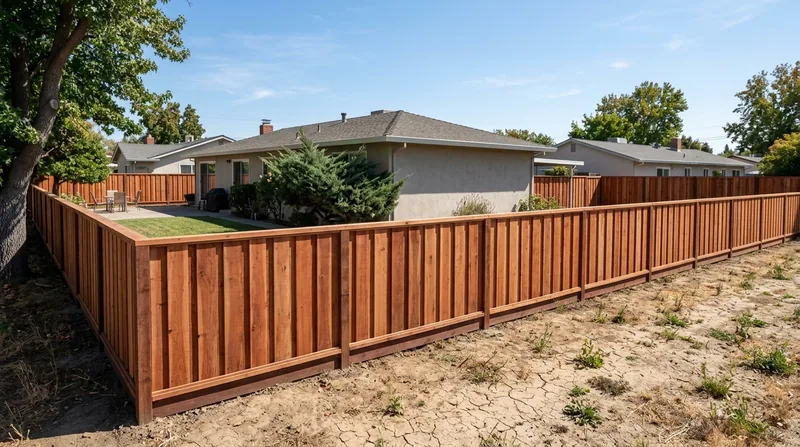




Wood and privacy fence installation in San Jose demands a different approach than fence work in flat, stable terrain. San Jose's post-war ranch neighborhoods sit on adobe clay that swells in winter rains and shrinks under dry summer heat, working posts loose year after year. Redwood and cedar privacy fencing remains the default look across these tracts, but only when posts are set deep enough and concrete is mixed right to resist the soil's seasonal movement. We install privacy fencing that stays straight through both extremes, with proper drainage and post spacing set to the specific conditions of your lot. Whether you need a new fence line or are repairing panels that have sagged or split, the work starts with understanding your soil, slope, and exposure to wind and salt air.
Why Privacy Fencing Matters in San Jose's Residential Neighborhoods
Privacy fencing does more than mark a property line in San Jose's dense single-family neighborhoods. It blocks street noise, contains children and pets, and creates outdoor living space on lots where every square foot counts. Adobe clay soil here is unforgiving, though. Posts set shallow or in tamped earth alone will shift as moisture swings from wet winter to dry summer, leaving panels tilted, rails cracked, and pickets loose within three to five years. Proper installation means setting posts in concrete deep enough to anchor against seasonal swell and shrink, spacing them to resist wind load, and choosing wood species that stand up to local UV and damp.
- Posts must be set in concrete to a depth that resists adobe clay's seasonal movement and keeps panels plumb year-round.
- Redwood and cedar heartwood resist rot and weathering better than pressure-treated pine, though they cost more and require periodic staining.
- Board-on-board and side-by-side configurations offer different wind resistance and privacy profiles depending on your lot's exposure.
- Proper drainage around the fence line prevents water pooling at the post base, which accelerates rot and loosens footings.
- Six-foot privacy fencing is the standard in most San Jose neighborhoods, but setback and height rules vary by city and HOA, so verify before digging.
A fence that lasts 15 to 20 years starts with the right post depth and concrete mix on day one.
Key info: San Jose's building department sets fence height and setback rules, and many neighborhoods have HOA architectural standards that govern material and color. Always check local requirements and deed restrictions before installation. Visit the San Jose Building Department website or contact your HOA before ordering materials.
How We Install Privacy Fencing in San Jose: A Step-by-Step Process
Installation starts with understanding your specific lot. We walk the fence line to identify slope, drainage patterns, soil type, and wind exposure. On sloped terrain, we decide whether to use a racked installation (panels follow the slope) or stepped installation (posts stay plumb, panels step down). We then call for a California 811 utility locate to mark underground lines before digging any post holes. Once utilities are marked and the line is confirmed, we set posts in concrete at depths that match your soil and wind exposure, space them to handle the panel weight and local wind load, and install rails and pickets with proper fastening to resist seasonal movement.
- We confirm your property line and fence setback with you, then call 811 for utility locates as required by California law.
- We assess soil type, slope, and wind exposure to determine post depth, spacing, and installation method (racked versus stepped).
- We set posts in concrete at depths ranging from 2.5 to 3.5 feet depending on soil conditions and frost line considerations.
- We install rails and pickets with galvanized or stainless fasteners to resist corrosion in San Jose's variable climate.
- We seal or stain redwood and cedar at installation to protect against UV and moisture, extending the fence life by years.
Each job is built to the conditions on your lot, not to a regional template.
Local example: A hillside property in Los Gatos with northeast exposure needs deeper posts and anti-sag bracing to handle winter wind. A flat lot in Campbell's adobe clay needs concrete set deep enough to resist seasonal swell. We adjust post spacing, concrete depth, and fastener spec to match what your lot demands, not what a price sheet says.
If you have an existing fence that needs repair rather than replacement, see our fence repair page for guidance on when repair makes sense and when replacement is the better choice.
Installation Methods: Racked, Stepped, and Specialty Configurations
| Approach | Description | Best for |
|---|---|---|
| Racked Installation | Panels follow the slope of the lot, with posts plumb and rails parallel to the ground contour. The pickets stay vertical and evenly spaced. | Moderate slopes up to 15 degrees where a stepped look would create large gaps at ground level. |
| Stepped Installation | Posts and panels step down in sections as elevation changes, with each section level. Requires more posts and labor but looks formal and keeps gaps minimal. | Steep slopes over 15 degrees or where a clean, formal appearance is required by HOA or personal preference. |
| Board-on-Board | Pickets overlap on both sides of the rails, creating a woven look with no gaps. Offers maximum privacy and wind resistance. | Lots with high wind exposure or where privacy is critical. Costs more than side-by-side due to extra material and labor. |
| Side-by-Side with Cap and Trim | Pickets run vertically on one side of the rails with small gaps, finished with a top cap and trim boards for a polished look. | Standard residential applications where cost and appearance balance. Common in San Jose's post-war neighborhoods. |
The method we choose depends on your lot's slope, wind exposure, and the look you want. Racked and stepped installation both work in San Jose, but the choice affects cost, drainage, and how the fence ages.
Wood and Privacy Fence Installation Cost in San Jose: What to Expect
Privacy fence installation in San Jose typically runs from $42 per linear foot for a straightforward side-by-side cedar or redwood fence on level ground, to $55 to $65 per linear foot for board-on-board or stepped installation on sloped terrain. A 150-foot fence on flat ground might cost $6,300 to $7,500; the same footage on a slope with stepped sections could run $8,250 to $9,750. The main cost drivers are post depth and concrete spec (set by your soil type), slope (racked versus stepped), wood species (cedar and redwood cost more than pressure-treated pine), and site access (tight side yards cost more to work in). Getting two or three estimates from local installers lets you compare labor, material choices, and how each crew handles your specific lot conditions.
See our pricing page for detailed breakdowns by material and configuration, and call us at (669) 274-3266 for a free estimate tailored to your property.
What to Look for When Hiring a Wood Fence Contractor Near Me in San Jose
Choosing the right fence contractor matters because a poorly installed fence will fail in San Jose's climate. Look for a contractor who understands adobe clay, seasonal movement, and how to set posts deep enough to hold through wet winters and dry summers. California requires a C-13 Fencing Contractor license for any fence project at or above $1,000 in combined labor and materials or requiring a building permit. An insured contractor carries a $25,000 bond and is insured for general liability and workers' compensation. Ask for proof of insurance and a certificate of coverage on request. Check references from recent jobs in your neighborhood, and ask how the contractor handles slope, drainage, and whether they recommend repair or replacement for existing fences. If your property is in an HOA, verify that the contractor understands your community's architectural standards for height, material, and color before work begins.
- Verify that the contractor holds a C-13 Fencing Contractor license, carries general liability and workers' compensation insurance, and can provide a certificate on request.
- Ask for references from at least three recent jobs in San Jose or nearby neighborhoods with similar soil and slope conditions.
- Confirm that the contractor calls for 811 utility locates before digging and understands local setback and height rules for your city.
- Discuss post depth, concrete spec, and how the contractor handles racked versus stepped installation on sloped lots.
- If you are in an HOA community, ask whether the contractor has experience getting architectural approval and respects deed restrictions on material and color.
A contractor who takes time to understand your lot and walks you through the process is more likely to deliver a fence that lasts.
Contact us at our contact page or call (669) 274-3266 to schedule a free on-site estimate. We have been installing fencing in San Jose and the surrounding Bay Area since 2016 and are members of the American Fence Association.
Wood & Privacy Fence Installation in San Jose: Pricing Guide
| Service | Price | Details |
|---|---|---|
| Side-by-Side Cedar or Redwood Fence | Starting at $42/ft | Includes posts set in concrete, rails, pickets, fasteners, and basic stain or sealer applied at installation on level ground. |
| Board-on-Board Privacy Fence | Starting at $52/ft | Double-sided picket overlap, maximum privacy, higher wind resistance, and extra material and labor compared to side-by-side configuration. |
| Stepped or Racked Installation on Slope | Starting at $55/ft | Adds labor and post count for terrain adaptation; racked follows slope, stepped creates level sections; cost varies by slope steepness and site access. |
| Pressure-Treated Pine Fence | Starting at $32/ft | Lower initial cost than cedar or redwood, requires less maintenance, shorter lifespan in San Jose's wet winters and UV exposure than premium species. |
| Specialized Configuration or Large-Scale Job | On estimate | Steep slopes, difficult access, custom cap and trim, or mixed materials require on-site assessment before pricing can be accurate and realistic. |
| Free Estimate | No charge | Response within 24 hours at (669) 274-3266, includes site walk, slope assessment, soil check, and written quote with no obligation to proceed. |
Indicative pricing, the exact cost depends on square footage, finish, and site access. Free personalized estimate within 24h at (669) 274-3266.


